Introduction
September 2026 could become a pivotal month for Bitcoin, Ethereum, and the wider cryptocurrency market. Investors are balancing several competing forces: institutional demand, global liquidity, interest-rate expectations, Bitcoin dominance, altcoin rotation, and derivatives positioning. Add crypto’s reputation for sharp reversals, and confidently predicting one outcome becomes difficult. A bullish rally is possible, but so are consolidation and a deeper correction if market conditions deteriorate.
The crypto market September 2026 outlook is therefore better understood through scenarios rather than a single price prediction. A bullish case would require stronger demand, supportive liquidity, and healthy market participation, while a bearish scenario could develop if leverage rises, capital flows weaken, or macroeconomic conditions become restrictive. By monitoring Bitcoin, Ethereum, altcoins, and broader financial indicators together, you can recognize which scenario is gaining momentum—and avoid treating every green candle as confirmation that the rocket has launched.
Key Takeaways
- Bullish scenario: Strong spot demand, improving liquidity, institutional inflows, and broad market participation could support higher crypto prices.
- Bearish scenario: Weak demand, restrictive financial conditions, excessive leverage, and institutional outflows could increase downside risk.
- Bitcoin: BTC remains the primary indicator of overall crypto-market strength and investor confidence.
- Ethereum: ETH/BTC performance can help reveal whether capital is expanding beyond Bitcoin.
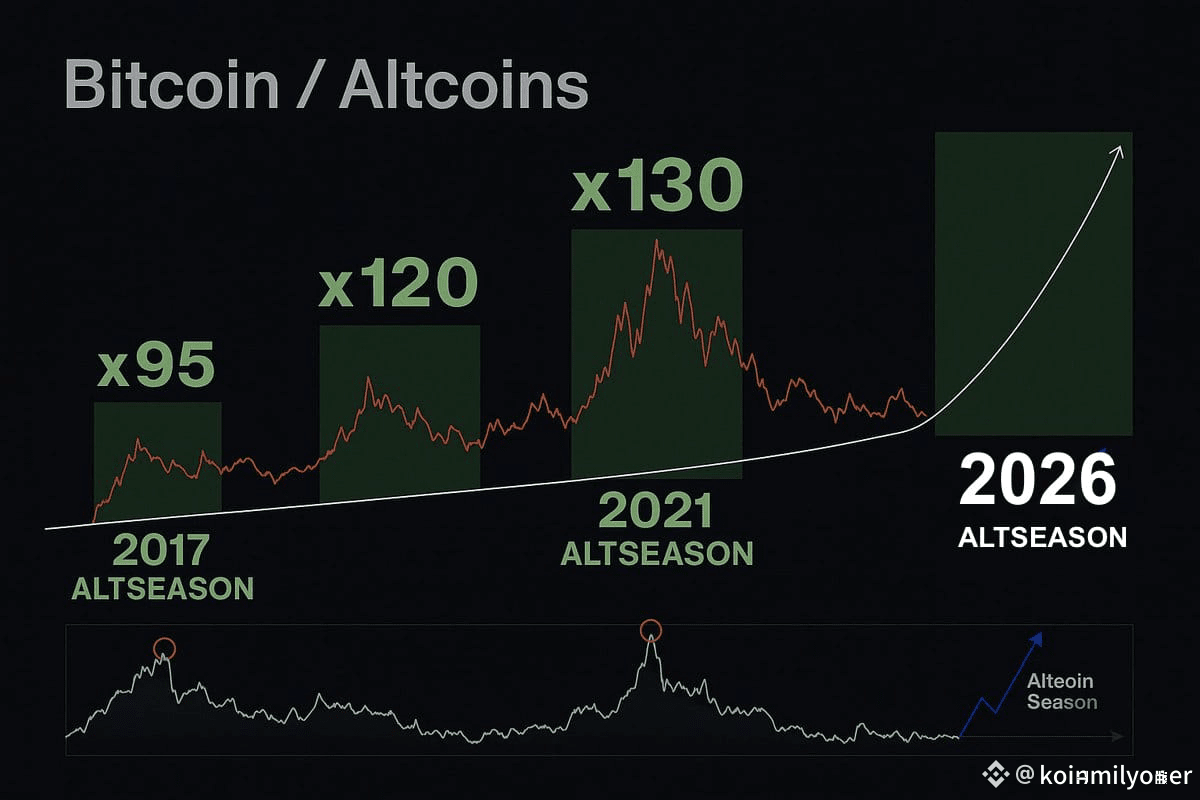
- Altcoins: Falling Bitcoin dominance and stronger market breadth could support an altcoin rotation.
- Macroeconomics: Interest-rate expectations, inflation, bond yields, and the U.S. dollar remain important external variables.
- Risk management: Investors can prepare for multiple outcomes instead of betting everything on one September prediction.
Crypto Market Outlook for September 2026
The September crypto outlook depends on whether demand can remain strong enough to absorb selling pressure while broader financial conditions support risk-taking. Bitcoin may establish the overall direction, but Ethereum, altcoins, stablecoins, and derivatives markets can reveal the quality of that trend.
Instead of focusing exclusively on price, investors should examine the forces behind market movements.
For example, rising Bitcoin supported by strong spot volume and moderate leverage presents a different setup from BTC rising while spot demand weakens and speculative futures positions explode.
September could realistically produce three environments: a sustained bullish trend, a bearish correction, or prolonged consolidation.
Understanding what each scenario looks like allows investors to update their outlook as new evidence arrives rather than trying to perfectly predict the month from day one.
Why Scenario Analysis Works Better Than Exact Predictions
Exact cryptocurrency price predictions attract attention because they’re simple. Unfortunately, financial markets aren’t.
A Bitcoin target can become obsolete after an unexpected inflation report, regulatory announcement, major institutional transaction, security incident, or change in global liquidity. Scenario analysis provides greater flexibility.
Investors can define conditions beforehand:
| Scenario | Key Conditions |
|---|---|
| Bullish | Strong demand, improving liquidity, healthy breadth |
| Neutral | Mixed flows, range-bound prices, inconsistent participation |
| Bearish | Weak demand, tighter liquidity, deteriorating breadth |
You can then compare incoming market data with those conditions.
This approach also reduces the temptation to defend an outdated prediction. If evidence changes, the scenario can change.
The objective isn’t to forecast every Bitcoin candle correctly. It’s to recognize when probabilities are shifting.
Crypto investors don’t get bonus points for remaining loyal to a forecast while the market repeatedly explains that it disagrees.
The Bullish Crypto Scenario for September
A bullish September would likely require several supportive factors to appear simultaneously.
Bitcoin would ideally maintain a constructive price structure while attracting sustained spot demand. Institutional capital flows could provide additional support, particularly if buying remains consistent rather than appearing during only a few trading sessions.
Improving global financial conditions could further strengthen the environment.
As Bitcoin stabilizes or rises, capital could begin moving toward Ethereum and eventually altcoins. Increasing trading volume and stronger market breadth would suggest that the rally isn’t limited to BTC.
Potential bullish indicators include:
- Strong Bitcoin spot demand
- Persistent institutional inflows
- Improving global liquidity
- Moderate derivatives leverage
- Stronger ETH/BTC
- Declining Bitcoin dominance during rising BTC prices
- Broad altcoin participation
- Expanding stablecoin activity
The more independent indicators align, the stronger the bullish case becomes.
Bitcoin Could Lead the Bullish Scenario
Bitcoin would probably remain the foundation of a sustainable September crypto rally.
Investors should monitor whether BTC attracts genuine spot-market demand rather than relying primarily on derivatives speculation. Spot buyers directly purchase Bitcoin, while futures traders can establish much larger positions through leverage.
Useful Bitcoin indicators include:
- Spot trading volume
- Investment-product flows
- Futures open interest
- Funding rates
- Options positioning
- Exchange balances
- Bitcoin dominance
A steadily appreciating Bitcoin accompanied by increasing spot volume and controlled funding rates could represent healthier market conditions.
BTC doesn’t necessarily need to rise vertically. In fact, periods of consolidation after gains can potentially help the broader crypto market.
When Bitcoin volatility decreases, investors may become more willing to allocate capital toward Ethereum and smaller cryptocurrencies.
A Bitcoin rally that constantly produces dramatic swings can have the opposite effect, keeping capital concentrated in BTC while traders remain cautious about taking additional altcoin risk.
Ethereum’s Role in a Bullish September
Ethereum can provide an important confirmation signal if the crypto market becomes increasingly bullish.
The ETH/BTC ratio measures Ethereum’s performance relative to Bitcoin. If ETH begins consistently outperforming BTC, investors may be showing greater willingness to move beyond the market’s dominant cryptocurrency.
That shift can potentially precede stronger performance across other crypto sectors.
Ethereum network fundamentals also matter. Investors can monitor activity across:
| Ethereum Indicator | What It Shows |
|---|---|
| Transactions | Network usage |
| Stablecoin activity | On-chain financial demand |
| DeFi activity | Capital deployed across protocols |
| Layer-2 usage | Scaling ecosystem adoption |
| Staking | Participation in network security |
| Application fees | Economic activity |
No individual metric determines ETH’s price.
However, improving network activity combined with stronger relative performance could reinforce a bullish September scenario.
Ethereum strength becomes particularly interesting when it occurs without significant deterioration in Bitcoin. That combination can indicate that new risk appetite is entering the market rather than investors simply abandoning BTC.
Could Ethereum Strength Trigger Altcoin Rotation?
Ethereum can act as a bridge between Bitcoin and higher-risk altcoins.
A possible capital-rotation cycle might look like:
Bitcoin → Ethereum → Large-cap altcoins → Mid-cap altcoins → Smaller speculative assets
Real markets don’t always follow this neat progression, but it provides a useful framework.
If Bitcoin establishes strength and then consolidates, traders may search for higher returns elsewhere. Sustained ETH/BTC strength can indicate that this process has begun.
For broader confirmation, investors should look for increasing altcoin volume and improving market breadth.
Market breadth measures how widely gains are distributed. If only three or four tokens are rallying, participation remains narrow. If dozens of established cryptocurrencies begin strengthening across multiple sectors, the move becomes more meaningful.
A combination of ETH strength, falling Bitcoin dominance, and expanding breadth could significantly strengthen the bullish case for altcoins during September.
The Bearish Crypto Scenario for September
The bearish scenario deserves just as much attention as the bullish one.
Crypto markets could come under pressure if demand weakens while financial conditions become less supportive. Persistent institutional outflows, declining spot volumes, rising bond yields, or unexpectedly restrictive monetary-policy expectations could reduce investor appetite for digital assets.
Excessive leverage could amplify those problems.
Potential bearish warning signs include:
- Weak Bitcoin spot demand
- Persistent investment-product outflows
- Rising yields
- Strengthening financial conditions against risk assets
- Falling ETH/BTC
- Weak altcoin breadth
- Extreme derivatives positioning
- Declining market liquidity
- Major regulatory or security shocks
These factors don’t need to appear simultaneously.
A major unexpected event can sometimes be enough to change sentiment rapidly. More commonly, however, market structure deteriorates gradually before price weakness becomes obvious.
That’s why monitoring demand and liquidity can be more useful than waiting for a dramatic headline.
What Could Trigger a Bitcoin Correction?
Bitcoin can correct even when its longer-term trend remains constructive.
Profit-taking is one possible trigger. After significant gains, investors may simply decide to lock in returns. A correction can then accelerate if leveraged traders are forced to exit.
Macroeconomic surprises present another risk.
Higher-than-expected inflation, rising interest-rate expectations, stronger bond yields, or tightening liquidity could reduce appetite for Bitcoin and other risk-sensitive assets.
Crypto-specific triggers could include:
- Large institutional outflows.
- Regulatory uncertainty.
- Exchange or custody problems.
- Cybersecurity incidents.
- Heavy selling from large holders.
- Excessive futures leverage.
Investors should pay particular attention to leverage.
If Bitcoin’s price rises while open interest and funding rates become extreme, the market may become increasingly vulnerable to a long squeeze, where declining prices trigger forced liquidations.
Corrections caused by leverage can develop extremely quickly because each liquidation adds additional selling pressure.
Why Altcoins Could Fall Harder in a Bearish Scenario
Altcoins typically carry additional risks compared with Bitcoin, including thinner liquidity, smaller investor bases, concentrated ownership, token inflation, and project-specific uncertainty.
These characteristics can amplify losses during market stress.
When investors become defensive, capital may rotate toward Bitcoin, stablecoins, traditional assets, or cash equivalents. Smaller cryptocurrencies can experience disproportionately large selling pressure.
Token unlocks add another complication.
A project may release previously restricted tokens to developers, early investors, employees, or ecosystem participants. If new supply reaches the market during already weak conditions, prices can face additional pressure.
Investors should examine:
- Upcoming token unlocks
- Circulating supply
- Fully diluted valuation
- Holder concentration
- Trading liquidity
- Protocol revenue
- Active users
A token falling 50% doesn’t automatically make it cheap. If supply continues expanding while demand disappears, valuations can decline much further.
Crypto has repeatedly demonstrated that “already down a lot” isn’t technically a floor.
The Neutral Scenario: September Could Stay Range-Bound
Bullish and bearish scenarios naturally receive the most attention, but September doesn’t have to produce a dramatic breakout.
Bitcoin could remain within a relatively broad trading range while investors wait for clearer macroeconomic or market-specific catalysts.
In a neutral scenario, investors might see:
- Mixed institutional flows
- Moderate Bitcoin volatility
- Stable BTC dominance
- Inconsistent ETH/BTC performance
- Sector-specific altcoin rallies
- Balanced derivatives positioning
- No clear change in global liquidity
This environment can frustrate both bulls and bears.
Individual cryptocurrencies may still produce substantial moves, particularly around project announcements or sector narratives. But the broader market would lack a consistent direction.
Range-bound periods aren’t necessarily unimportant. Consolidation can allow leverage to reset, long-term investors to accumulate, and market structure to develop before the next larger move.
Investors should therefore avoid interpreting a lack of immediate momentum as evidence that nothing is happening underneath the surface.
Global Liquidity and Federal Reserve Expectations
Macroeconomic conditions remain central to September’s crypto outlook.
Bitcoin and altcoins trade globally, but U.S. monetary policy can significantly influence financial conditions. Interest rates affect borrowing costs and capital allocation, while bond yields influence the relative attractiveness of riskier investments.
Investors should watch:
- Inflation releases
- Employment data
- Central-bank communication
- Interest-rate expectations
- Treasury yields
- U.S. dollar strength
- Equity-market sentiment
- Global liquidity
Importantly, markets respond to expectations versus reality.
An inflation number can decline and still disappoint investors if they expected a much larger drop. Similarly, weak economic data could increase expectations for easier monetary policy while simultaneously raising concerns about economic growth.
This makes macro analysis more complicated than simply labeling individual releases bullish or bearish.
For crypto, the central question is whether financial conditions encourage or discourage investors from taking additional risk.
How the U.S. Dollar Can Affect Crypto Sentiment
The U.S. dollar provides another useful macro indicator.
A stronger dollar can coincide with tighter global financial conditions and more defensive investor positioning. A weaker dollar may sometimes accompany greater appetite for risk assets.
However, the relationship isn’t perfectly inverse.
Bitcoin can rise while the dollar strengthens, particularly when crypto-specific demand is sufficiently strong. Likewise, a falling dollar doesn’t guarantee BTC appreciation.
Investors should therefore combine dollar movements with bond yields, liquidity indicators, equities, and crypto spot demand.
For example, falling yields, improving liquidity, a softer dollar, and rising Bitcoin spot demand appearing together could provide stronger bullish evidence than any one signal individually.
The goal is confirmation across several indicators.
Macro markets are complicated enough without forcing every Bitcoin move to fit neatly into one currency chart.
Bitcoin Dominance and the Altcoin Outlook
Bitcoin dominance could help investors determine whether September’s market favors BTC or altcoins.
Rising dominance indicates that Bitcoin is gaining market share relative to the broader crypto market. This can occur during Bitcoin-led rallies and defensive market environments.
Declining dominance can signal capital rotation toward Ethereum and altcoins.
The combination matters:
| BTC Price | BTC Dominance | Likely Environment |
|---|---|---|
| Rising | Rising | Bitcoin-led bullish |
| Rising | Falling | Broadening crypto rally |
| Sideways | Falling | Potential altcoin rotation |
| Falling | Rising | Defensive/bearish |
| Falling | Falling | Broad weakness or mixed rotation |
For altcoin investors, declining dominance is most encouraging when Bitcoin remains structurally healthy.
If BTC crashes, falling dominance alone provides limited reassurance because altcoins may still be experiencing substantial losses.
Combine dominance with ETH/BTC, trading volume, stablecoin liquidity, and market breadth for a more reliable picture.
Institutional Flows Could Determine Market Direction
Institutional participation remains an important structural feature of modern crypto markets.
Investment products, professional trading firms, corporations, custody providers, and traditional financial institutions can influence both liquidity and market sentiment.
For September, investors should focus on persistent flows.
One day of significant buying doesn’t necessarily establish a trend. Several weeks of consistent demand provide more meaningful evidence that professional capital is increasing crypto exposure.
Institutional activity also extends beyond simply purchasing Bitcoin or Ethereum.
Traditional financial companies may participate through:
- Stablecoins
- Tokenized assets
- Blockchain settlement
- Crypto custody
- Derivatives
- Investment products
Greater institutional involvement can improve market depth, but it doesn’t eliminate volatility.
Professional investors take profits and reduce exposure too. What matters for September is whether net capital flows provide sustained demand or create persistent selling pressure.
Derivatives and Leverage: A Hidden September Risk
Crypto derivatives can significantly amplify price movements.
Open interest measures outstanding futures and derivatives positions, while funding rates help indicate whether perpetual futures traders are leaning heavily bullish or bearish.
Rapidly rising open interest combined with strongly positive funding rates can indicate crowded long positions.
If prices suddenly decline, liquidations may force leveraged traders to sell. Those forced sales can push prices lower, causing additional liquidations.
The opposite occurs when excessive short positions are squeezed during a rally.
Investors can therefore compare derivatives activity with spot-market demand.
A rally supported by strong spot buying and moderate leverage may have a healthier foundation. A rally driven primarily by aggressive futures speculation can become fragile.
Leverage doesn’t tell you exactly when the market will reverse. It tells you when the consequences of a reversal could become considerably more dramatic.
Key September Signals Investors Should Track
Rather than relying on one prediction, investors can create a September dashboard.
| Indicator | Bullish Signal | Bearish Signal |
|---|---|---|
| Bitcoin spot demand | Increasing | Weakening |
| Institutional flows | Persistent inflows | Persistent outflows |
| ETH/BTC | Rising | Falling |
| Market breadth | Expanding | Narrowing |
| Stablecoin liquidity | Growing | Contracting |
| BTC dominance | Falling with strong BTC | Rising during weakness |
| Funding rates | Moderate | Extreme |
| Open interest | Controlled | Excessive |
| Global liquidity | Improving | Tightening |
| Bond yields | Supportive | Rapidly rising |
No single indicator guarantees the outcome.
Instead, watch whether multiple independent signals begin moving consistently in one direction. The bullish case strengthens as demand and participation improve. The bearish case gains credibility when liquidity, breadth, and underlying demand deteriorate together.
Conclusion
The crypto market September 2026 outlook includes credible bullish, bearish, and neutral scenarios. A bullish environment would likely feature strong Bitcoin spot demand, supportive institutional flows, manageable leverage, improving ETH/BTC performance, and broader altcoin participation. A bearish scenario could emerge if liquidity tightens, demand weakens, leverage becomes excessive, or macroeconomic conditions surprise markets negatively.
Rather than trying to predict September with absolute certainty, investors can monitor how these conditions evolve. Build a dashboard around Bitcoin demand, institutional flows, Ethereum strength, BTC dominance, derivatives positioning, and global liquidity. Then adjust your outlook when the evidence changes. Crypto rewards opportunity, but it also punishes excessive confidence remarkably efficiently. Scenario planning won’t remove volatility, but it can make that volatility considerably easier to navigate.
FAQs
Can crypto remain bullish if Bitcoin dominance keeps rising?
Yes. Rising Bitcoin dominance can occur during a Bitcoin-led bull market in which BTC appreciates faster than most altcoins. The broader crypto market can still rise in dollar terms even when altcoins underperform Bitcoin on a relative basis.
What is the difference between a crypto correction and a bear market?
A correction is generally a shorter-term decline occurring within a larger market trend, while a bear market involves more persistent weakness and deteriorating sentiment. There is no universal percentage or duration separating the two, so investors should consider broader market structure.
Can stablecoin growth predict a bullish crypto market?
Stablecoin growth can indicate expanding on-chain liquidity, but it doesn’t guarantee that capital will enter Bitcoin or altcoins. Stablecoins also support payments, remittances, trading, and decentralized finance, so investors should combine supply trends with actual crypto-market demand.
Why does market breadth matter during a crypto rally?
Market breadth reveals how many cryptocurrencies participate in a rally. Broad participation can indicate stronger overall risk appetite, while gains concentrated in only a few assets suggest a narrower market. Breadth is particularly useful when evaluating potential altcoin rotations.
What happens when crypto funding rates become negative?
Negative funding generally means short-position holders pay long-position holders in perpetual futures markets. Persistent negative funding can indicate bearish positioning. If shorts become overcrowded and prices rise unexpectedly, forced liquidations can contribute to a short squeeze.
Should investors change their portfolio based on monthly crypto forecasts?
Monthly forecasts can provide useful context, but portfolio decisions should also reflect investment objectives, time horizon, financial circumstances, and risk tolerance. Scenario analysis is generally more adaptable than restructuring a portfolio around one predicted monthly price direction.