Introduction
When altcoins begin climbing faster than Bitcoin, the crypto market suddenly becomes a lot more interesting—and usually much noisier. The 2026 altcoin rally has investors watching everything from Bitcoin dominance and stablecoin flows to interest-rate expectations and social sentiment. While individual cryptocurrencies can surge because of project-specific developments, a broad altcoin rally normally requires something bigger: improving liquidity, confidence in Bitcoin, and investors becoming increasingly willing to take risks.
Understanding those forces can help you determine whether rising altcoin prices reflect a healthier expansion of the cryptocurrency market or simply another wave of short-term speculation. Bitcoin remains particularly important because it often establishes the direction before capital rotates toward alternative cryptocurrencies. Liquidity provides the fuel, while market sentiment influences where that capital goes next. Below, we’ll break down how these factors interact, which indicators can reveal strengthening altcoin momentum, and what could potentially bring the rally to an abrupt end.
Key Takeaways
- Liquidity provides the capital needed for a broad and sustainable altcoin rally.
- Bitcoin often leads crypto rallies before money rotates into Ethereum and smaller cryptocurrencies.
- Market sentiment can amplify altcoin gains as investors become more comfortable taking additional risk.
- Bitcoin dominance can reveal whether altcoins are capturing a growing share of the crypto market.
- Stablecoin supply provides clues about available crypto-native liquidity and potential buying power.
- Altseason signals become stronger when multiple sectors outperform rather than a handful of coins pumping.
- Risk management remains essential because liquidity and sentiment can reverse surprisingly quickly.
Why Is the Altcoin Market Rallying in 2026?
Broad cryptocurrency rallies rarely have a single cause. Instead, several forces tend to reinforce one another.
Bitcoin can establish bullish momentum, encouraging investors to return to crypto. Greater liquidity can provide additional capital, while rising prices improve market sentiment. Investors then become more comfortable moving into assets with higher potential returns—and higher risk.
Altcoins are natural beneficiaries of this process.
Because most alternative cryptocurrencies have much smaller market capitalizations than Bitcoin, they require less capital to produce significant percentage moves.
The cycle can look roughly like this:
Bitcoin strength → improving sentiment → increased liquidity → capital rotation → altcoin outperformance
Of course, markets rarely behave this neatly. Macro developments, regulation, leverage, token-specific news, and speculation can disrupt the pattern at any stage.
Why Altcoins Can Move Faster Than Bitcoin
Market capitalization and liquidity are two major reasons.
Bitcoin is an enormous global asset relative to most cryptocurrencies. Moving its price substantially requires significant buying or selling pressure.
Smaller altcoins are different.
When demand suddenly increases for a token with a modest market capitalization and relatively thin order books, prices can move rapidly. A comparatively small amount of fresh capital can create an outsized percentage gain.
This characteristic attracts traders during bullish periods.
But the same mechanism creates greater downside. Thin liquidity can magnify losses when investors rush to sell. That’s why a token capable of rising 50% in several days can also erase those gains with uncomfortable efficiency.
Liquidity Is Fueling the 2026 Altcoin Rally
Liquidity is one of the most important concepts for understanding crypto market cycles.
At a basic level, liquidity refers to how easily assets can be bought and sold. From a broader market perspective, investors also use the term to describe the availability of capital throughout financial markets.
When liquidity conditions improve, investors may become more willing to allocate money toward riskier assets.
Cryptocurrencies—and particularly altcoins—can benefit significantly from that environment.
Global Liquidity Can Influence Crypto Risk Appetite
Crypto doesn’t exist in a vacuum.
Interest rates, central-bank policy, inflation expectations, economic growth, bond yields, and conditions in equity markets can all influence investor behavior.
When cash and low-risk investments offer attractive returns, speculative assets face greater competition for capital. When investors expect financial conditions to become more supportive, appetite for growth and risk assets can improve.
That doesn’t mean a single monetary-policy decision automatically sends altcoins higher.
Markets are forward-looking. Traders frequently respond to expectations months before economic conditions actually change.
For altcoin investors, the important question is whether broader financial conditions are encouraging capital to move toward or away from risk.
Stablecoins Provide Crypto-Native Liquidity
Global liquidity tells only part of the story. Cryptocurrency has its own internal liquidity system, and stablecoins play a central role.
Stablecoins such as USDT and USDC allow traders to hold dollar-linked value while remaining within crypto markets. They can be moved between exchanges, used in decentralized finance, or deployed quickly when investors identify opportunities.
Growing stablecoin liquidity can therefore indicate increasing purchasing power within the crypto ecosystem.
What Stablecoin Growth Can Tell Investors
Stablecoin supply isn’t a perfect bullish indicator.
Investors may hold stablecoins precisely because they’re cautious and don’t want exposure to volatile cryptocurrencies. Still, growing stablecoin capitalization combined with increasing exchange volumes and stronger crypto prices can provide useful context.
Investors can monitor:
- Total stablecoin market capitalization
- Stablecoin exchange balances
- Decentralized exchange activity
- Blockchain transfer volumes
- DeFi liquidity
- Stablecoin supply across major networks
When stablecoin liquidity expands while altcoin trading activity rises, it may indicate that additional capital is being deployed beyond Bitcoin.
Essentially, stablecoins can provide the fuel. Investors still need to hit the accelerator.
Bitcoin Is Setting the Direction for Altcoins
Bitcoin remains the cryptocurrency market’s most influential asset.
During many market cycles, BTC attracts capital before altcoins. Its deeper liquidity, longer history, and broader recognition make it a common entry point for investors increasing crypto exposure.
A strong Bitcoin rally can therefore improve confidence throughout the digital asset market.
Bitcoin Stability Can Be Especially Bullish for Altcoins
Interestingly, altcoins don’t necessarily need Bitcoin to keep making aggressive gains.
A period where BTC consolidates after a strong rally can sometimes create favorable conditions for alternative cryptocurrencies.
Investors who have generated Bitcoin profits may start searching for greater returns elsewhere. Ethereum and other large-cap altcoins can attract money first, followed by mid-cap and smaller cryptocurrencies.
A typical rotation might resemble:
- Bitcoin attracts fresh capital.
- BTC rallies and establishes market confidence.
- Bitcoin begins consolidating.
- Ethereum and large-cap altcoins strengthen.
- Capital spreads into sector-specific tokens.
- Small caps and highly speculative assets begin accelerating.
This isn’t a guaranteed sequence. Still, it illustrates why Bitcoin can remain healthy while altcoins begin outperforming.
Bitcoin Dominance Is a Key Signal to Watch
Bitcoin dominance measures BTC’s share of the total cryptocurrency market capitalization.
It’s one of the most commonly monitored indicators when investors want to determine whether capital is rotating into altcoins.
When Bitcoin dominance rises, BTC is generally gaining relative market share. When dominance falls, altcoins are collectively gaining ground.
How to Read Bitcoin Dominance During a Rally
Context matters considerably:
| Market Condition | Possible Interpretation |
|---|---|
| BTC rising + dominance rising | Bitcoin-led rally |
| BTC rising + dominance falling | Altcoins gaining relative strength |
| BTC consolidating + dominance falling | Potential altcoin rotation |
| Total market rising + dominance falling | Broadening altcoin rally |
| BTC falling sharply | Elevated risk for altcoins |
The strongest altcoin environment may occur when the overall crypto market continues expanding while Bitcoin dominance gradually declines.
That suggests capital isn’t simply leaving Bitcoin—it may be spreading across the broader cryptocurrency market.
Dominance shouldn’t be used alone, though. Combining it with ETH/BTC, altcoin volume, liquidity, and market breadth provides a more complete picture.
Market Sentiment Is Amplifying Altcoin Gains
Liquidity provides capital, but psychology determines how aggressively investors deploy it.
Crypto markets are heavily influenced by sentiment. When investors become optimistic, they’re often willing to move further along the risk curve.
Bitcoin may suddenly seem too conservative for traders hunting outsized returns. Large-cap altcoins become attractive, followed by increasingly speculative projects.
FOMO Can Turn a Rally Into a Frenzy
Fear of missing out—FOMO—is particularly powerful in cryptocurrency because markets operate continuously and price moves can be extreme.
Rising prices attract attention. Attention brings new buyers. New buying pushes prices higher, generating more attention.
This feedback loop can produce explosive rallies.
Social media, search interest, trading-app activity, and mainstream coverage can all provide clues about changing retail sentiment.
However, extreme optimism can eventually become a warning rather than a bullish signal.
When investors stop examining fundamentals and begin buying anything with a token symbol, speculation may be approaching unsustainable levels.
Crypto has a funny way of making risk look smallest precisely when prices have already risen the most.
Crypto Narratives Are Directing Where Money Flows
Not every altcoin benefits equally from improving liquidity.
Investors tend to concentrate capital around specific narratives. During different market phases, attention may shift toward artificial intelligence, decentralized finance, Layer-1 networks, Layer-2 scaling, tokenization, gaming, or decentralized infrastructure.
A powerful narrative can cause an entire category of tokens to outperform.
Fundamentals Still Matter During Narrative-Driven Rallies
Investors should distinguish between market excitement and actual adoption.
Useful metrics include:
- Active users and addresses
- Transaction volume
- Total value locked
- Protocol fees
- Protocol revenue
- Developer activity
- Stablecoin liquidity
- Token supply and unlocks
A token can pump because its sector is popular without the underlying project experiencing meaningful growth.
That doesn’t prevent short-term price appreciation, but it can increase downside risk once the narrative cools.
The strongest projects may combine market momentum with genuine growth in usage and economic activity.
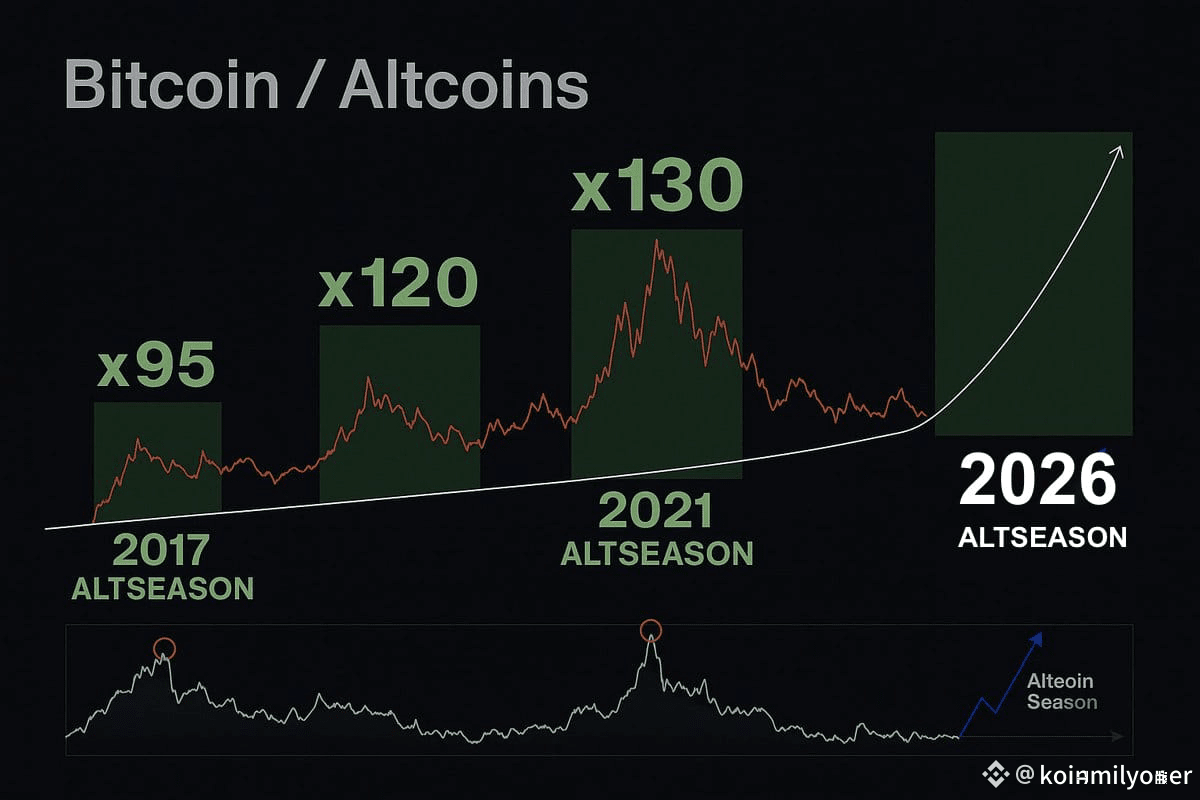
Is the 2026 Rally Becoming a Full Altcoin Season?
A broad altcoin rally doesn’t automatically qualify as altcoin season, or altseason.
A genuine altseason generally involves a substantial portion of alternative cryptocurrencies outperforming Bitcoin over a meaningful period.
Market breadth is therefore essential.
Key Altseason Signals to Monitor
Investors can watch for several conditions occurring together:
- Declining Bitcoin dominance
- Strengthening ETH/BTC
- Expanding altcoin market capitalization
- Rising altcoin trading volumes
- Increasing stablecoin liquidity
- Strength across multiple crypto sectors
- Growing on-chain activity
- Increasing retail participation
If only a few meme coins or individual tokens are pumping, the rally may still be narrow.
If large-cap altcoins, DeFi, blockchain infrastructure, AI-related tokens, and smaller cryptocurrencies begin strengthening simultaneously, the case for broader altseason conditions becomes stronger.
What Could End the Altcoin Rally?
Liquidity and sentiment can work in both directions.
A sharp Bitcoin decline could cause investors to reduce risk, sending capital away from smaller cryptocurrencies. Changes in macroeconomic expectations can also weaken appetite for speculative assets.
Leverage creates another major vulnerability.
When traders borrow heavily to increase exposure, relatively small price declines can trigger forced liquidations. Those liquidations create additional selling, potentially causing cascading declines.
Other risks include regulatory developments, exchange problems, smart-contract exploits, project failures, and major token unlocks.
Investors should therefore monitor downside indicators alongside bullish signals.
Conclusion
The 2026 altcoin rally can be understood through three major forces: liquidity, Bitcoin, and market sentiment. Improving financial conditions and expanding crypto-native liquidity can provide capital, while Bitcoin strength helps establish confidence. Once investors become more comfortable taking risk, money can rotate into Ethereum, large-cap altcoins, sector-specific projects, and eventually smaller speculative cryptocurrencies.
Whether that momentum develops into a major altcoin season depends on market breadth and continued capital inflows. Watch Bitcoin dominance, ETH/BTC, stablecoin supply, altcoin trading volumes, on-chain activity, and broader financial conditions rather than relying on price alone. Most importantly, remember that sentiment changes quickly. Understanding where liquidity is coming from—and where it’s going—offers a much stronger framework than simply chasing whichever altcoin happens to be pumping today.
FAQs
Does more global liquidity always make altcoins rise?
No. Improving liquidity can create more favorable conditions for risk assets, but cryptocurrency prices also depend on investor demand, regulation, Bitcoin performance, project fundamentals, and market positioning. Liquidity is an important factor rather than a guaranteed price signal.
Why can altcoins rally while Bitcoin moves sideways?
Bitcoin consolidation can encourage traders to rotate profits toward higher-risk cryptocurrencies. If overall market confidence remains strong, a relatively stable BTC price may give investors greater confidence to explore Ethereum, large-cap altcoins, and smaller speculative assets.
How does investor sentiment affect altcoin prices?
Positive sentiment can increase investors’ willingness to accept risk, pushing capital toward smaller cryptocurrencies. Negative sentiment does the opposite. Because many altcoins have relatively thin liquidity, shifts in psychology can produce unusually large price movements.
Can stablecoin supply predict an altcoin rally?
Stablecoin growth can indicate additional crypto-native liquidity, but it cannot predict a rally by itself. Investors may hold stablecoins without deploying them. Stablecoin data is more useful when combined with trading volume, market capitalization, and price trends.
What is capital rotation in cryptocurrency?
Capital rotation occurs when investors move money from one part of the market to another. During bullish cycles, funds may shift from Bitcoin into Ethereum, then toward large-cap, mid-cap, and smaller altcoins as investors pursue greater potential returns.
Why do altcoins usually fall harder when sentiment turns bearish?
Altcoins often have lower liquidity, smaller market capitalizations, and greater speculative exposure than Bitcoin. When investors reduce risk, limited buying demand and leveraged liquidations can magnify declines, causing alternative cryptocurrencies to fall significantly faster than BTC.



One thought on “What’s Behind the 2026 Altcoin Rally? Liquidity, Bitcoin and Market Sentiment”