
Could September deliver the next major crypto pump? Bitcoin, Ethereum, and altcoins can move surprisingly fast once liquidity, investor sentiment, and market positioning begin pointing in the same direction. But a few green candles don’t necessarily signal the start of a sustainable rally. Crypto markets remain sensitive to institutional flows, monetary policy, leverage, stablecoin liquidity, and Bitcoin’s ability to maintain its broader trend. Separating genuine strength from short-lived speculation is therefore essential.
If you’re wondering whether a September crypto pump is coming, watching confirmation signals is more useful than guessing a Bitcoin price target. Bitcoin dominance can reveal where capital is concentrating, while ETH/BTC and market breadth can show whether investors are moving toward riskier assets. Spot trading volume, derivatives data, and macroeconomic conditions provide additional evidence. Below, we’ll examine the major bullish and bearish signals that could determine whether September produces a broad crypto rally—or another convincing fakeout.
Key Takeaways
- Bitcoin: A sustainable BTC move supported by spot demand could provide the foundation for a broader September rally.
- Liquidity: Expanding stablecoin and global financial liquidity could improve conditions for crypto assets.
- Ethereum: ETH outperforming Bitcoin may signal increasing investor appetite for risk beyond BTC.
- Altcoins: Improving market breadth and falling Bitcoin dominance could confirm broader capital rotation.
- Institutional flows: Persistent investment-product demand may strengthen the case for sustainable crypto momentum.
- Leverage: Extreme funding rates and rapidly expanding open interest can make a pump vulnerable to liquidations.
- Macro conditions: Interest rates, bond yields, inflation expectations, and the U.S. dollar can influence September risk appetite.
What Would a September Crypto Pump Look Like?
A genuine crypto pump would involve more than Bitcoin jumping sharply over a few hours. Ideally, a sustainable rally would develop through rising spot demand, healthy trading volume, manageable leverage, and gradually expanding participation across the market.
Bitcoin would likely remain the primary driver. If BTC establishes strength without excessive volatility, investors may become more comfortable moving capital toward Ethereum and eventually higher-risk altcoins.
A healthy rally could therefore progress through several phases:
- Bitcoin attracts sustained demand.
- BTC maintains its gains or begins consolidating.
- Ethereum strengthens relative to Bitcoin.
- Bitcoin dominance starts declining.
- Large-cap altcoins gain momentum.
- Market breadth expands into smaller cryptocurrencies.
Markets rarely follow a perfect sequence, of course. Still, watching how capital moves can help distinguish a broad market trend from several unrelated token pumps.
Sustainable Rally vs. Short-Lived Pump
The word “pump” is often associated with rapid price increases, but speed isn’t necessarily a sign of strength.
A sustainable rally generally has underlying demand supporting it. Buyers continue entering the market during pullbacks, trading volume remains healthy, and leverage doesn’t become dangerously one-sided.
A short-lived pump can look very different.
| Signal | Healthier Rally | Fragile Pump |
|---|---|---|
| Spot volume | Consistently rising | Relatively weak |
| Open interest | Moderate growth | Rapid expansion |
| Funding rates | Balanced | Extremely positive |
| Market breadth | Broad | Concentrated |
| Pullbacks | Buyers appear | Momentum collapses |
| Liquidity | Improving | Thin |
A rally driven mainly by leveraged futures traders can unwind rapidly if prices move against them.
Investors should therefore ask who is buying and how they’re buying, not simply whether prices are rising.
Bitcoin Is the First Signal to Watch
Bitcoin remains the center of the cryptocurrency market, making BTC price structure one of the first indicators to monitor for a September rally.
A bullish setup would ideally involve sustained spot demand, increasing trading activity, and the ability to hold important price areas after short-term corrections. Persistent buying is generally more convincing than a vertical move produced during a few highly leveraged sessions.
Bitcoin volatility matters too.
When BTC rises too rapidly, investors may hesitate to move capital into altcoins because Bitcoin itself offers strong momentum. If BTC crashes, smaller cryptocurrencies often experience even larger declines.
A stable or gradually appreciating Bitcoin can sometimes provide a better environment for broader crypto-market expansion.
Rather than attempting to predict Bitcoin’s exact September closing price, investors can watch whether its market structure becomes progressively stronger or weaker as new information arrives.
Bitcoin Dominance Could Reveal Capital Rotation
Bitcoin dominance represents BTC’s share of the total cryptocurrency market capitalization. It’s one of the most useful indicators for understanding where investors are concentrating capital.
Different combinations can imply different market conditions:
| Bitcoin Price | BTC Dominance | Possible Signal |
|---|---|---|
| Rising | Rising | Bitcoin-led rally |
| Rising | Falling | Potential altcoin rotation |
| Sideways | Falling | Improving altcoin conditions |
| Falling | Rising | Risk-off environment |
For investors expecting a broad September crypto pump, a stable or rising Bitcoin combined with gradually falling dominance could be particularly interesting.
That combination can indicate that capital remains inside crypto while spreading toward Ethereum and altcoins.
However, declining dominance shouldn’t be interpreted in isolation. Stablecoins and newly issued tokens can influence total crypto market capitalization.
Confirmation from trading volume, market breadth, and ETH/BTC performance makes the signal considerably more useful.
Spot Trading Volume Could Confirm Real Demand
Volume can help investors determine whether a market move has meaningful participation behind it.
If Bitcoin breaks higher while spot trading volume expands across multiple exchanges, more investors are actively participating in the move. A rally occurring on weak spot volume may deserve greater caution, especially if derivatives activity is simultaneously exploding.
Spot markets matter because buyers directly purchase the underlying cryptocurrency.
Derivatives traders, by comparison, can create large exposures using leverage. This isn’t inherently problematic—futures and options serve legitimate trading and hedging purposes—but excessive leverage can exaggerate both rallies and corrections.
Investors can compare:
- Spot trading volume
- Futures volume
- Open interest
- Funding rates
- Exchange liquidity
- Buy-versus-sell pressure
The goal isn’t to find one magical volume number.
Instead, watch whether spot demand confirms the price trend. If prices rise, spot volume strengthens, and leverage remains reasonable, the market may have a healthier foundation for continued gains.
Institutional Crypto Flows Matter
Institutional participation has become an increasingly important component of the cryptocurrency market. Professional investors can gain exposure through regulated investment products, custody platforms, derivatives, and other financial infrastructure.
Persistent institutional demand can potentially strengthen a Bitcoin rally by introducing capital from investors operating outside crypto’s traditional retail ecosystem.
For September, investors should pay attention to trends rather than single-day figures.
Several consecutive periods of strong inflows may indicate more durable demand. Alternating inflows and outflows could suggest uncertainty or portfolio rebalancing.
Institutional adoption also reaches beyond Bitcoin. Growing interest in Ethereum, stablecoins, blockchain settlement, and tokenized financial assets can influence broader crypto sentiment.
But don’t automatically interpret “institutional” as bullish.
Professional investors hedge positions, take profits, and reduce exposure when conditions change. The important signal is sustained net demand and whether that capital produces stronger underlying market liquidity.
Ethereum Strength Could Be the Next Confirmation
If Bitcoin provides the foundation for a September rally, Ethereum could offer clues about whether that rally is expanding.
The ETH/BTC ratio measures Ethereum’s performance relative to Bitcoin. When this ratio rises consistently, ETH is outperforming BTC.
That can indicate investors are willing to move further along the crypto risk spectrum.
Ethereum also sits at the center of several important blockchain sectors, including:
- Decentralized finance
- Stablecoins
- Layer-2 scaling
- Tokenized assets
- Decentralized applications
- Blockchain infrastructure
Investors should monitor Ethereum network activity alongside price performance. Growing transactions, stablecoin transfers, layer-2 activity, DeFi usage, and application demand can help establish whether ETH’s strength has fundamental support.
If ETH/BTC rises while Bitcoin remains healthy and broader altcoin volumes increase, the evidence for a market-wide September rally becomes more convincing.
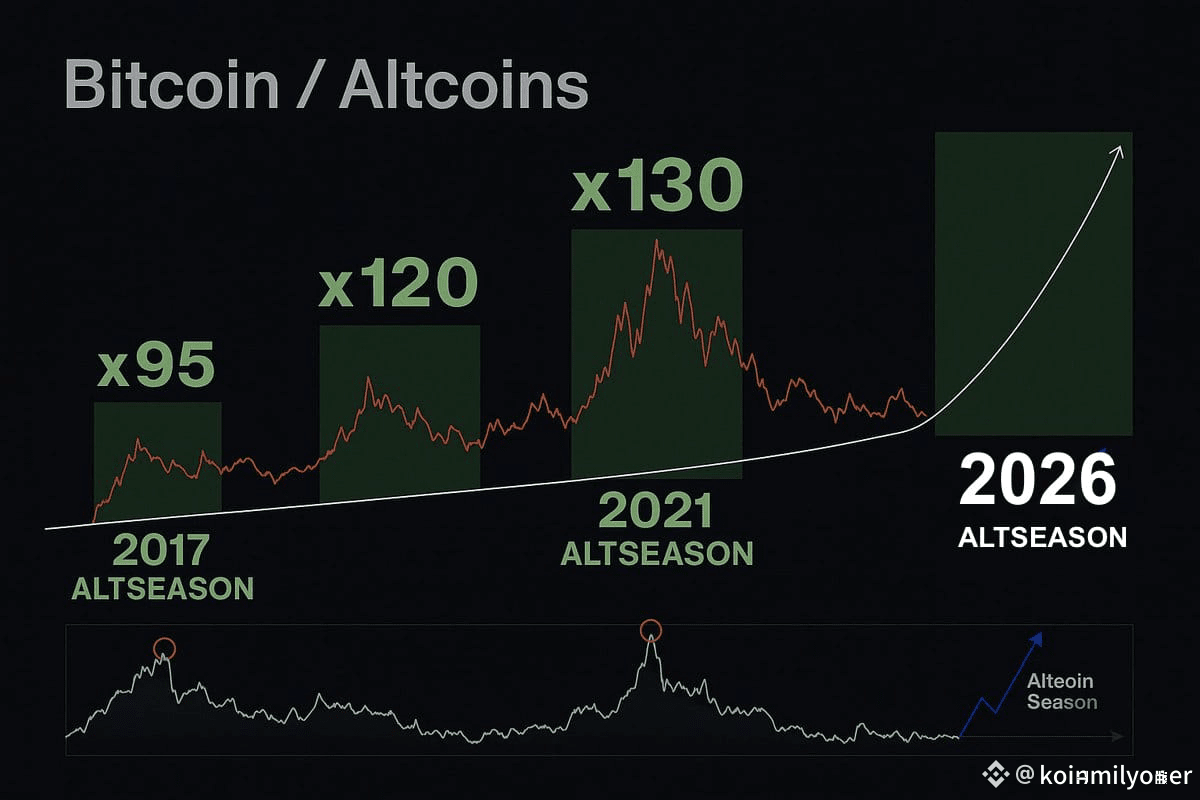
ETH/BTC and the Path Toward Altseason
ETH/BTC is particularly interesting because Ethereum can act as a bridge between Bitcoin and smaller cryptocurrencies.
One possible capital-rotation pattern looks like:
Bitcoin → Ethereum → Large-cap altcoins → Mid-caps → Small-caps
This sequence isn’t guaranteed, but it illustrates how investors sometimes increase risk as confidence improves.
If Bitcoin rises first and then consolidates, traders may look elsewhere for higher potential returns. Ethereum is often among the first major assets to attract attention. Sustained ETH outperformance can then encourage speculation across other smart-contract networks, DeFi tokens, and smaller assets.
For a convincing altseason signal, investors should seek additional confirmation.
Falling Bitcoin dominance, expanding altcoin volume, stronger market breadth, and increased stablecoin activity would collectively strengthen the case.
If ETH spikes briefly while most altcoins remain weak, that’s probably not altseason yet. Crypto Twitter may disagree enthusiastically, but breadth matters.
Stablecoin Liquidity Could Fuel the Market
Stablecoins play an important role in crypto liquidity because traders use them for settlement, payments, decentralized finance, and moving capital between exchanges and blockchain networks.
Growing stablecoin supply and transaction activity can indicate that more liquidity is available within the digital-asset ecosystem.
That doesn’t automatically mean a crypto pump is coming.
Stablecoins can be held without being invested in Bitcoin or altcoins. They can also be used for payments, international transfers, DeFi strategies, or other financial activities.
Still, increasing stablecoin liquidity combined with stronger spot demand can be a constructive signal.
Investors may monitor:
| Stablecoin Indicator | Why It Matters |
|---|---|
| Total supply | Measures available stablecoin liquidity |
| Exchange balances | Shows capital potentially available for trading |
| Transfer volume | Indicates network activity |
| DeFi deposits | Shows on-chain capital deployment |
| Blockchain distribution | Reveals where liquidity is concentrating |
Stablecoin trends become particularly useful when analyzed alongside Bitcoin and Ethereum demand.
Altcoin Market Breadth Could Confirm the Pump
A broad crypto rally should eventually extend beyond Bitcoin and Ethereum.
Market breadth measures how widely gains are distributed across the market. If only a handful of cryptocurrencies rise while most remain flat or decline, the market’s underlying participation is narrow.
If large numbers of altcoins begin strengthening simultaneously, the rally has broader support.
Investors can monitor performance across different sectors, including:
- Layer-1 blockchains
- Layer-2 networks
- DeFi
- Real-world asset tokenization
- Stablecoin infrastructure
- DePIN
- AI-related crypto
- Gaming
Sector diversity matters.
If one speculative category is producing nearly all the gains, the move could reflect a temporary narrative rather than a market-wide expansion in risk appetite.
Improving breadth alongside declining Bitcoin dominance and ETH/BTC strength would provide a stronger indication that September momentum is spreading through the crypto market.
Global Liquidity and Interest Rates Remain Critical
Crypto doesn’t operate independently of the global financial system. Interest rates, bond yields, inflation, employment data, currency movements, and central-bank expectations can influence investors’ willingness to hold volatile assets.
Supportive financial conditions can create a better environment for crypto risk-taking.
This September, investors should consider monitoring:
- Inflation reports
- Employment data
- Central-bank communication
- Interest-rate expectations
- Government bond yields
- U.S. dollar strength
- Equity-market sentiment
- Global liquidity conditions
Markets frequently move based on how economic data compares with expectations.
For example, lower inflation might support expectations for easier monetary policy. But extremely weak economic data could increase recession fears and reduce risk appetite.
This explains why supposedly “good” economic news doesn’t always produce a crypto rally.
Instead of interpreting individual economic releases in isolation, ask whether financial conditions are becoming more or less supportive of speculative assets.
Derivatives Leverage Could Make or Break the Rally
One of the biggest risks to a September crypto pump is excessive leverage.
Perpetual futures and other derivatives allow traders to establish positions larger than the collateral they provide. When too many traders become positioned in the same direction, the market can become vulnerable to forced liquidations.
Two indicators are particularly useful:
Open interest measures the value of outstanding derivatives positions.
Funding rates reflect payments between traders holding long and short perpetual futures positions.
Rapidly increasing open interest alongside extreme positive funding can suggest that bullish positioning has become crowded.
If crypto prices then fall slightly, leveraged long positions may be liquidated. Those forced sales can push prices lower, triggering additional liquidations.
A healthy rally doesn’t require zero leverage. It simply benefits from having enough genuine spot demand to prevent derivatives speculation from becoming the entire engine.
What Could Stop a September Crypto Pump?
Even if several bullish signals emerge, downside risks remain.
A major macroeconomic surprise could tighten financial conditions. Persistent institutional selling could weaken Bitcoin demand. Regulatory developments, exchange problems, protocol exploits, or geopolitical events could also change sentiment quickly.
Warning signs may include:
- Weakening spot demand
- Persistent investment-product outflows
- Rising Bitcoin dominance during a BTC decline
- Falling ETH/BTC
- Deteriorating altcoin breadth
- Extreme funding rates
- Excessive open interest
- Declining stablecoin liquidity
Investors should also watch for divergence.
For example, if Bitcoin keeps rising while trading volume falls and leverage increases rapidly, the market’s headline strength may hide deteriorating conditions underneath.
Bullish prices and bullish fundamentals aren’t always the same thing.
A September Crypto Pump Checklist
Rather than betting on a prediction, investors can use a simple dashboard to evaluate whether conditions increasingly support a rally.
| Signal | Bullish Confirmation |
|---|---|
| Bitcoin | Strong structure and sustained spot demand |
| BTC dominance | Gradual decline during stable/rising BTC |
| ETH/BTC | Sustained upward trend |
| Spot volume | Expanding with prices |
| Market breadth | More altcoins participating |
| Stablecoins | Improving liquidity |
| Institutional flows | Persistent net demand |
| Funding rates | Positive but not extreme |
| Global liquidity | Increasingly supportive |
| Macro conditions | Improving risk appetite |
You don’t need every indicator to turn bullish simultaneously.
The goal is confirmation. When several unrelated metrics begin telling a similar story, confidence in the market trend can increase.
If signals remain contradictory, patience may be preferable to chasing a rapidly moving market.
Conclusion
So, is a September crypto pump coming? A meaningful rally is possible, but price action alone won’t confirm it. Investors should watch Bitcoin’s underlying demand, BTC dominance, spot volume, institutional flows, ETH/BTC strength, stablecoin liquidity, market breadth, and global financial conditions. A rally supported by several of these factors would have a stronger foundation than one driven primarily by leveraged speculation.
The best strategy isn’t necessarily predicting the exact day a pump begins. Build a dashboard of signals and let market conditions provide confirmation. If Bitcoin remains strong, Ethereum starts outperforming, altcoin participation broadens, and leverage stays manageable, the bullish case becomes more compelling. If those signals deteriorate, caution may be warranted. In crypto, catching upside is useful—but surviving the fakeouts is pretty important too.
FAQs
How quickly can a crypto pump turn into a correction?
A crypto rally can reverse within hours when liquidity is thin or leverage is excessive. Liquidations can accelerate declines rapidly, particularly in smaller altcoins. Sustainable trends usually experience pullbacks too, so investors should avoid assuming every correction automatically ends a broader rally.
What is a crypto liquidation cascade?
A liquidation cascade occurs when price movements force leveraged positions to close automatically. Those forced trades move prices further, triggering additional liquidations. Cascades can produce unusually fast price changes and occur on both the long and short sides of derivatives markets.
Can crypto pump while Bitcoin dominance is rising?
Yes. Bitcoin can lead a broad crypto rally while gaining market share, particularly when new capital initially concentrates in BTC. Altcoins may still rise in dollar terms while underperforming Bitcoin. Rising dominance therefore doesn’t necessarily mean the entire crypto market is bearish.
Does high trading volume always confirm a bullish breakout?
No. High volume indicates strong market activity, but it can represent buying or selling. Investors should examine price structure, spot-versus-derivatives activity, and whether gains hold after the initial breakout before concluding that high volume confirms sustainable bullish demand.
What is a crypto fakeout?
A fakeout occurs when price temporarily breaks an important technical level but fails to sustain the move. Traders who entered expecting continued momentum can become trapped when price reverses. Volume, spot demand, and broader market confirmation can help evaluate breakouts.
Should investors chase altcoins after Bitcoin pumps?
Not automatically. Some altcoins may benefit from subsequent capital rotation, but others can remain weak or fall when Bitcoin volatility increases. Investors should evaluate relative strength, liquidity, tokenomics, market breadth, and project fundamentals before assuming every altcoin will follow BTC.



One thought on “Is a September Crypto Pump Coming? Key Signals to Watch”