The Future of Cryptocurrency in 2027 is likely to be shaped by Bitcoin’s market role, institutional participation, and demand for blockchain applications with practical uses. A new Bitcoin high is possible, though interest rates, regulation, and crypto-market liquidity will influence whether prices rise or retreat.

For you as a U.S. investor, the key is to treat forecasts as scenarios, not guarantees. A strong market could benefit major assets and selected projects; a weak one could expose high-volatility tokens to sharp losses.
Can Bitcoin Reach a New High in 2027?

Bitcoin could reach a new high in 2027 if demand grows faster than available selling pressure. Historical cycles offer context, while ETF activity, broader institutional access, and macroeconomic conditions will help determine whether buyers sustain momentum.
What Historical Market Cycles Suggest
Bitcoin’s past market cycles have included steep rallies followed by substantial declines. The halving, which reduces the rate at which new BTC enters circulation, has preceded earlier bull markets, though each cycle has unfolded under different economic and market conditions.
The next halving is expected in 2028, so the familiar post-halving pattern does not provide a direct forecast for 2027. If you use cycle history, treat it as one input alongside demand, investor positioning, and broader financial conditions. Past performance does not establish the timing or size of a future rally.
Demand Drivers That Could Support BTC
Institutional access could support Bitcoin demand if investors continue allocating through regulated investment products and custody services. Corporate or fund participation may broaden the buyer base, while clearer U.S. rules could reduce uncertainty for some market participants.
Scarcity alone does not set a price. You should also watch whether new buyers absorb available supply, whether long-term holders begin selling into strength, and whether trading activity remains deep enough to support large transactions. A rally built on durable demand has a different footing from one driven mainly by short-term leverage.
What Could Weaken the Bull Case
Higher interest rates or a stronger preference for lower-risk assets could reduce demand for speculative investments. A sudden decline in liquidity, regulatory setbacks, or a major security failure could also weaken confidence and push prices down.
You should account for leverage and concentration risk as well. When many traders borrow to buy, forced liquidations can accelerate a decline. Bitcoin’s size and market prominence do not prevent large drawdowns, so position sizing and a clear plan for losses remain important.
Which Cryptocurrencies Could Lead the Market?

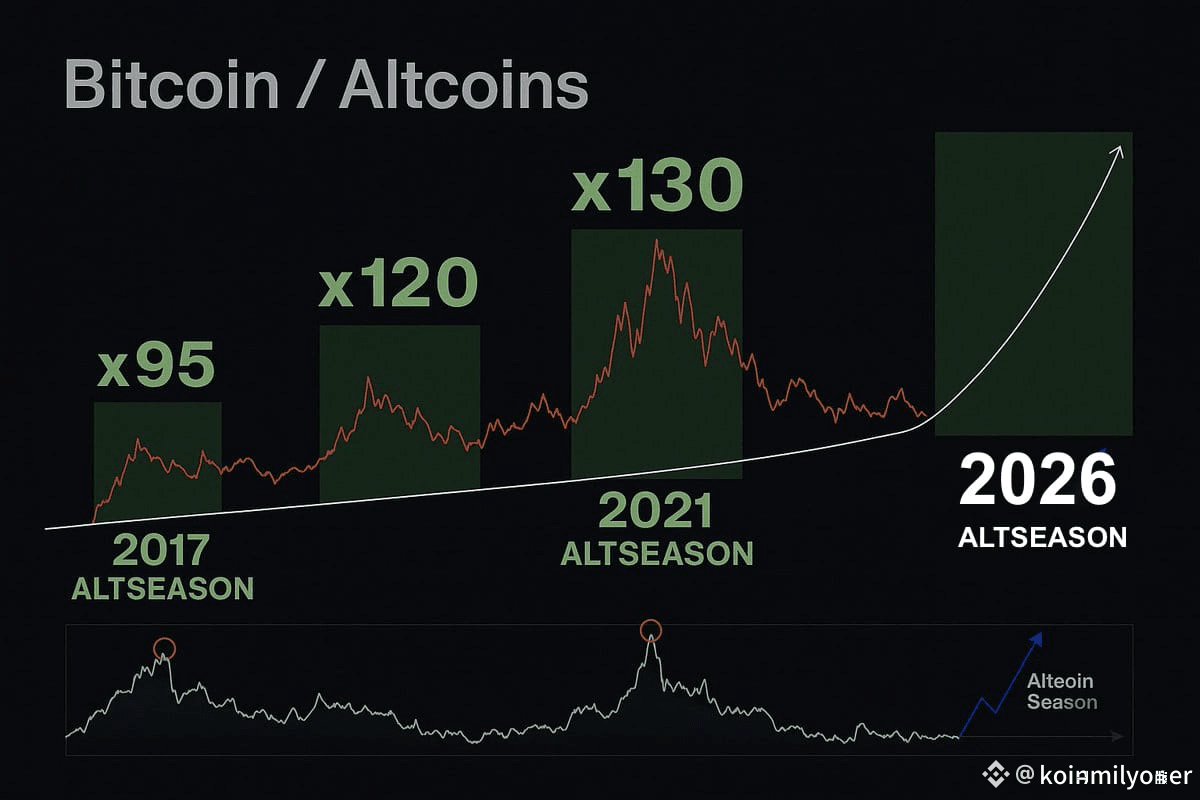
Bitcoin and Ethereum are likely to remain central to market activity, while selected altcoins could outperform if their networks attract sustained use. For your watchlist, compare each asset’s role, developer and user activity, liquidity, token supply, and exposure to regulatory changes.
Bitcoin and Ethereum
Bitcoin has the clearest role as a scarce digital asset and a benchmark for crypto-market sentiment. Ethereum serves as a programmable network for applications, tokens, and decentralized finance, giving it a different set of adoption drivers and technical risks.
If you compare the two, examine what supports demand for each asset. Bitcoin’s investment case is tied closely to monetary scarcity and market access; Ethereum’s also depends on network activity, competition from other blockchains, and how value accrues to ETH.
XRP and Solana
XRP’s market outlook is linked to the use of the XRP Ledger and developments in Ripple’s business, alongside legal and regulatory conditions that affect U.S. access. Solana’s appeal is associated with a high-activity ecosystem for applications and digital assets, with network performance and reliability important to monitor.
For both, distinguish a growing narrative from measurable adoption. Look at transaction activity, liquidity, developer engagement, and whether users return after periods of market excitement. Price moves can outpace changes in network use, especially during speculative rallies.
Other High-Growth Candidates
Assets such as BNB, Cardano, Dogecoin, TRON, Toncoin, and Chainlink may also draw investor attention in 2027. Their prospects depend on different factors, including exchange or application ecosystems, payment activity, community demand, and infrastructure use.
A token’s past visibility does not guarantee future relevance. Before adding an asset, check how its supply changes over time, who controls important decisions, what the network is used for, and whether the token has a clear role in that activity. Keep speculative positions sized for the possibility of a severe loss.
How to Assess a Top-10 Crypto Watchlist
A top-10 watchlist can help you compare established assets without treating market rank as a quality score. You might track Bitcoin, Ethereum, XRP, Solana, BNB, Cardano, Dogecoin, TRON, Toncoin, and Chainlink, then review how their market positions and fundamentals change.
Use the same questions for each asset: What does the network enable? Are users and developers active? How concentrated are ownership and governance? What supply changes are scheduled? Can you trade the asset with adequate liquidity? Consistent checks make it easier to spot when a project’s price narrative has moved ahead of its underlying use.
How Could AI, DeFi, and Tokenization Shape Crypto?
AI, decentralized finance, and tokenization could expand crypto’s practical uses while adding new technical and regulatory risks. Your best way to assess these themes is to separate the usefulness of an application from the investment case for its associated token.
AI-Related Crypto Projects
Crypto projects linked to AI include networks for computing resources, data access, identity, and automated transactions. The category is broad, and an AI label by itself does not show that a project has paying users or a durable role in its market.
Check whether a project has a working product, recurring demand, and a transparent connection between network use and token value. You should also consider security and privacy: AI systems interacting with wallets or smart contracts can create new paths for fraud, errors, and unauthorized transactions.
DeFi Adoption and Risks
Decentralized finance lets users interact with financial services through blockchain-based protocols and smart contracts. It could expand access to financial services while creating significant regulatory challenges (for DeFi and cryptocurrencies).
For you, the practical risks include smart-contract vulnerabilities, volatile collateral, liquidation rules, and the possibility that a protocol’s liquidity disappears during market stress. Review how a service handles assets and what happens when a system fails. High advertised yields deserve close scrutiny because they can reflect risks that are hard to see from the headline rate.
Real-World Asset Tokenization
Tokenization represents ownership interests or claims on assets through digital tokens. It could support more transparent records and efficient transfers, with access shaped by the underlying asset, legal structure, and platform. Digital ownership models can promote transparency, efficiency, and accessibility.
Tokenization does not remove the legal and operational work behind an asset. You still need to know who holds the underlying property, how ownership rights are enforced, what redemption terms apply, and which parties maintain the records. Those details determine what a token entitles you to claim.
What Could Trigger or Stall a Crypto Bull Run?
A crypto bull run in 2027 would need sustained buying, available liquidity, and conditions that support investor risk-taking. Your outlook should account for macroeconomic changes alongside policy developments and crypto-specific shocks.
Interest Rates and Investor Risk Appetite
Interest rates influence the return investors can earn from lower-risk assets and the cost of borrowing. If financial conditions loosen and investors seek higher returns, digital assets could attract additional demand; tighter conditions could have the opposite effect.
Watch inflation, central-bank policy, and credit conditions as part of your market view. These indicators do not predict crypto prices on their own, though they help explain why a rally may strengthen or lose momentum.
Institutional Adoption and Regulation
Institutional participation can increase access and trading depth, while U.S. regulation can shape which products and services reach investors. Changes to rules for exchanges, custody, stablecoins, and investment products could affect both confidence and market structure.
Regulatory clarity may support activity by giving firms and customers more defined requirements. Policy uncertainty can make institutions cautious and leave investors facing abrupt changes in access or compliance. Track enacted rules and implementation details, since proposed policies do not have the same effect as rules in force.
Volatility, Liquidity, and Market-Cycle Risks
Crypto prices can move sharply, and thinner liquidity can magnify those moves. A market rally may reverse quickly when leveraged positions unwind, a major platform fails, or investors sell to meet obligations elsewhere.
Set your risk limits before a period of rapid price movement. Consider how much of your portfolio you can expose to a high-volatility asset, how you will respond to a major drawdown, and whether you can access your holdings when trading conditions deteriorate. A 2027 forecast should include a path for losses as well as a path for gains.
A 2027 Outlook Built on Scenarios, Not Certainty
Your most useful 2027 outlook is a set of scenarios tied to observable conditions, not a single price target. A bullish case would involve resilient demand, favorable liquidity, and wider use of crypto networks; a bearish case would involve tighter financial conditions, weak adoption, or major regulatory and security setbacks.
You can review your assumptions as conditions change. Track Bitcoin and Ethereum demand, adoption signals across altcoin networks, U.S. policy developments, and market liquidity, then adjust your exposure to fit your risk limits. That approach keeps your decisions connected to evidence as the market moves.